

Choosing A Healthy Cooking Oil!
How To Choose A Healthy Cooking Oil!
Choosing a Healthy Cooking Oil
Rather than looking for a single “perfect” cooking oil, we should focus on incorporating a healthy cooking oil into a healthy diet and active lifestyle.
The reassuring fact is that the subject becomes much simpler when viewed scientifically and calmly.
***
Understanding What Cooking Oils Contain
All edible oils are composed primarily of fatty acids. These are broadly classified into monounsaturated fats (MUFA), polyunsaturated fats (PUFA), and saturated fats (SFA).
Most oils contain a mixture of all three in varying proportions. The balance between them influences both health impact and cooking stability.
Rather than labelling oils as simply “good” or “bad,” it is more useful to understand how each category behaves.
***
Oils Rich in Monounsaturated Fats (MUFA)
Oils such as groundnut oil, olive oil, mustard oil, and rice bran oil contain significant amounts of monounsaturated fats.
These oils are generally associated with favourable cardiovascular profiles and offer good stability for routine home cooking, including sautéing and moderate-heat preparation.
When used in moderation as the primary cooking oil within a balanced diet, MUFA-rich oils represent a practical and heart-friendly choice for everyday use.
They are particularly suitable for Indian cooking practices, where food is often prepared at medium-high temperatures, refrigerated, and reheated for a subsequent meal.
Compared with polyunsaturated fat-rich oils, MUFA-rich oils are more heat stable and form fewer oxidative compounds at higher temperatures.
***
Oils Rich in Polyunsaturated Fats (PUFA)
Oils such as sunflower, safflower, soybean, and corn oil are rich in polyunsaturated fats.
These fats are associated with supporting cardiovascular health when consumed in appropriate amounts.
However, PUFA-rich oils are somewhat less stable at high temperatures and form oxidative substances more readily than monounsaturated fat-rich oils.
For this reason, they are better suited for medium-temperature cooking rather than high-temperature deep frying.
When used sensibly as a routine cooking oil at moderate temperatures, and when repeated reheating of food prepared in them is avoided, they can serve as a reasonable primary cooking oil within a balanced dietary pattern.
***
Oils Rich in Saturated Fats
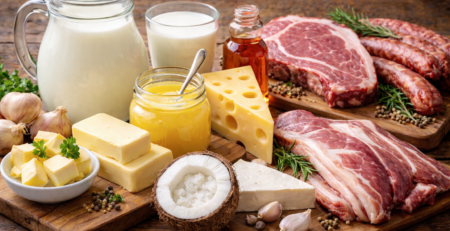
Examples include ghee and coconut oil.
These fats are relatively stable at higher temperatures but contain a high proportion of saturated fat.
Although they may raise HDL (“good”) cholesterol, excessive consumption can increase LDL cholesterol in many individuals. For this reason, they should be used in moderation, particularly in those with elevated cardiovascular risk.
In most parts of India, ghee is traditionally used in small quantities rather than as the primary cooking medium. When consumed in limited amounts within a balanced diet, it is unlikely to pose significant harm in metabolically healthy individuals.
***
Cardiovascular Health: The Bigger Picture
When consumed in moderation as part of a balanced diet, commonly used cooking oils do not show major differences in cardiovascular risk markers.
The overall dietary pattern has a far greater influence on long-term health than minor variations between similar oils.
A diet rich in vegetables, pulses, whole grains, nuts, and minimally processed foods, along with regular physical activity, remains the cornerstone of cardiovascular health.
***
Groundnut Oil and Olive Oil in Indian Cooking
Overall, the two oils that appear particularly suitable for Indian-style cooking are groundnut oil and olive oil.
Groundnut oil contains approximately 45–50 percent monounsaturated fatty acids, 30–35 percent omega-6 polyunsaturated fatty acids, 15–20 percent saturated fats, and provides vitamin E as its primary antioxidant.
When used in moderation and at moderate heat within a balanced diet, it is a practical and appropriate cooking oil for Indian homes.
Extra virgin olive oil contains approximately 70–75 percent monounsaturated fatty acids, 8–12 percent omega-6 polyunsaturated fatty acids, and 10–15 percent saturated fats. It is also rich in natural antioxidants including polyphenols and vitamin E.
These properties make extra virgin olive oil particularly supportive of heart health when used in moderation at low temperatures or as a salad dressing oil.
Current evidence does not show major differences in cardiovascular risk markers when either oil is used moderately within a balanced diet. Total oil consumption and overall dietary quality matter more than the specific oil chosen.
If cooking is done at moderate temperatures and overall oil consumption is reasonable within a balanced dietary pattern, groundnut oil can be safely used as the primary cooking oil.
If oil is used mainly for low temperature cooking or as a dressing, extra virgin olive oil is an excellent heart-healthy option.
Extra virgin olive oil is not suitable for high-temperature cooking or shallow frying.
For occasional deep frying at higher temperatures, refined groundnut oil or refined (not extra virgin) olive oil is more appropriate.
Both are stable at higher temperatures, although refined olive oil does not provide the same antioxidant benefits as extra virgin olive oil.
***
Practical Healthy Kitchen Habits
Keep deep frying of foods to a minimum.
Discard leftover oil after frying one batch of food. Do not reuse it.
Avoid very high temperature cooking whenever possible.
Promptly refrigerate leftover food. Reheat only the portion required for the next meal and refrigerate the remaining portion immediately.
Avoid repeated reheating of cooked food.
These are simple, practical measures that can be easily adopted in Indian homes.
Also read the articles ‘The Good And The Bad Fats’ and the ‘Basics Of Nutrition’ on this website.







Leave a Reply