Beliefs And Disbeliefs About Proteins In Vegetarian Food!
Facts And Myths About Proteins In Vegetarian Food!
There is a growing fear, especially amongst vegetarians these days that their diets are deficient in proteins and that unless they count proteins in their food in grams and add protein supplements to their diets, they are somehow lacking in proteins.
Yet, if we pause and look at how Indian meals have traditionally been eaten, a different picture emerges.
Proteins in Indian vegetarian diets have never come from one single ‘high-protein’ food. Instead, it quietly shows up across the day – through pulses and cereals, milk and its products viz. curds and buttermilk. Groundnuts and other nuts include dry fruit nuts also provide proteins.
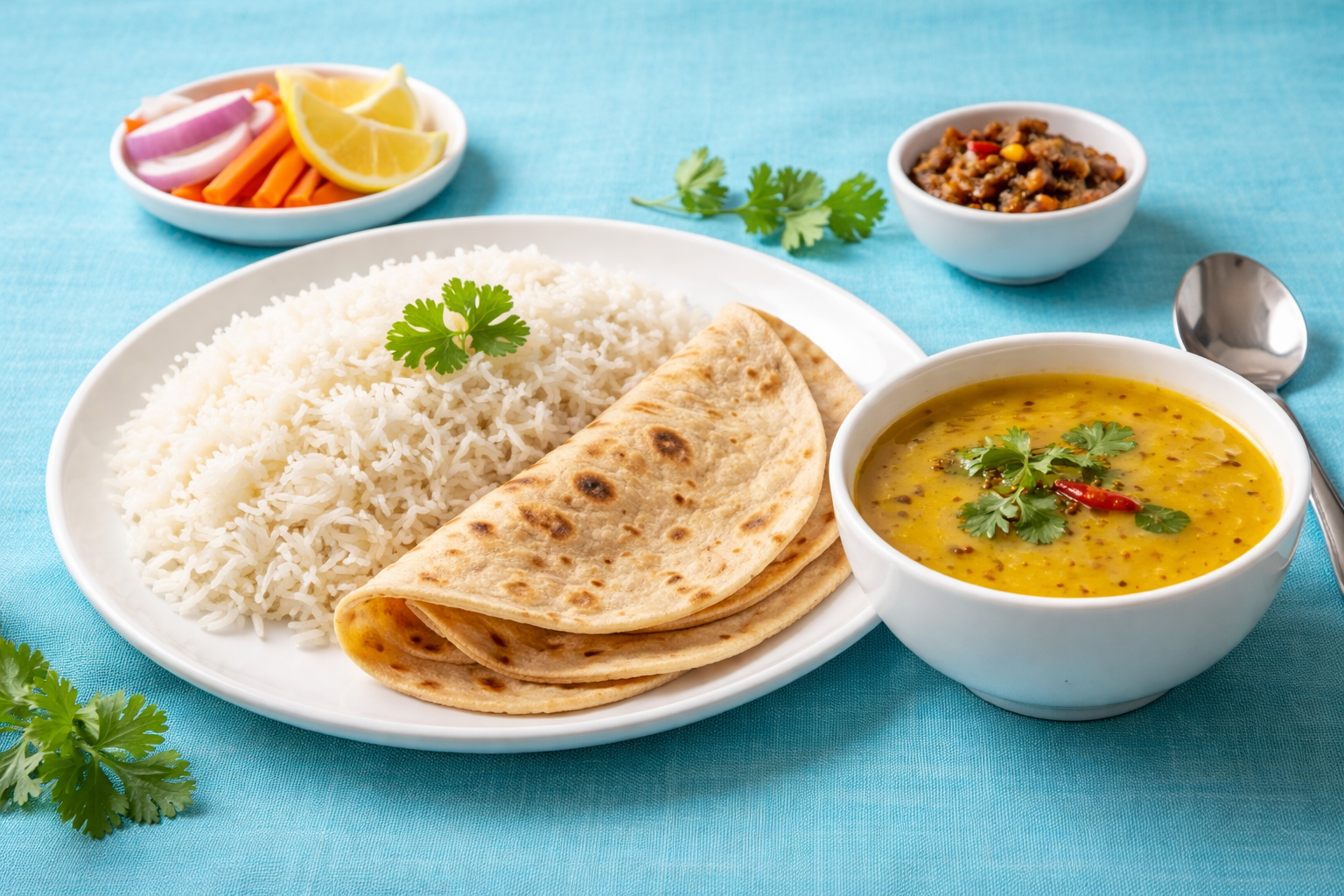
What makes Indian food particularly effective is how naturally it combines foods. Dal with rice, dal with roti, idli with sambar, rice and mug (or other dals) in khichadi, idli with sambar, dosa with sambar—these are not just comfort foods. Cereals and pulses complement each other’s amino acids and together provide proteins of high quality, allowing the body to use their proteins more efficiently. No calculations are required; the combination itself does the work.
A simple way to think about protein is to look at your plate. If a reasonable portion of your meal includes dal, legumes, cereals and milk products, nuts, or seeds, and you eat such meals two or three times a day, your protein needs are usually taken care of. This is how major Indian meals have always been structured.
It is also worth remembering that more protein is not always better. Beyond a certain point, extra protein does not turn into extra strength—it simply becomes excess. Very high protein intakes are needed only in special situations such as intense sports training or medical recovery, not in everyday life.
The body cannot handle excess proteins too well.
Excess proteins increase the acid load in the body. This puts greater work load on the kidney, the bones and the liver. Calcium is drawn out of the bones. This weakens them and may cause fractures. It can also lead to formation kidney stones and kidney damage.
High protein diets are also high in saturated fats, cholesterol and calories. This can also lead to heart disease and certain cancers.
For most people, protein deficiency does not occur because the diet is vegetarian. It occurs when meals are skipped, portions are too small, or food variety is lacking. A regular, balanced Indian vegetarian diet has sustained generations with good health and functional strength.
Perhaps the simplest truth is this: in Indian food, protein does not need to be counted—it needs to be consistently present. And when traditional foods are eaten mindfully, it almost always is.
***
Here are calories and proteins supplied by our common foods:
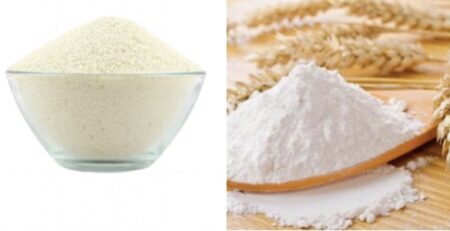
Chapati made from 35 gm wheat flour:
Calories 120, proteins 4 gm.
Chapati made from 50 gm wheat flour:
Calories 170, proteins 6 gm.
Bhakri made from 70 gm jowar / bajri flour:
Calories 240, proteins 7 to 8 gm.
Bhakri made from 100 gm jowar / bajri flour:
Calories 340, proteins 12 gm.
Cooked rice 1 wati (100 gm)
Calories 130, proteins 2.5 gm.
Amti / varan / dal 1 wati (100 gm)
Calories 90 – 100, proteins 6 – 7 gm.
Usal cooked 1 wati (100 gm)
Calories 120 – 140, proteins 8 – 9 gm
Cooked vegetables (non – leafy) 1 wati (100 gm) Calories 40 – 60 proteins 1.5 – 2.5 gm
Cooked vegetables (leafy) 1 wati (100 gm) Calories 25 – 35 proteins 2 – 3 gm.
Home skimmed buffalo milk 1 cup (180 ml) Calories 90 – 95, proteins 6.5 – 7 gm
Home skimmed cow milk 1 cup (180 ml) Calories 65 – 70, proteins 6 – 6.5 gm.
Pohe 1 wati (100 g cooked):
Calories 130 – 150 Calories and proteins 2.5 – 3 gm.
Upama 1 wati (100 g cooked): Calories 140 – 160 and proteins 3 – 3.5 gm.
Thalipith (100 g cooked, mixed cereal–pulse flour):
Calories 210 – 230 and proteins 6 – 7 gm.
Amboli / Ghavan (100 g cooked, rice-based):
Calories 160 – 170 kcal and proteins 3 – 3.5 gm.
Idli (2 home standard-size idlis):
Calories 120 – 130 and proteins 4 – 4.5 gm.
Dosa (made from batter equivalent to 2 idlis, plain):
Calories 150 – 170 and proteins 4 – 5 gm.
From this you can easily calculate your total protein consumption in your daily food.
Also read the article ‘Protein Sufficiency In Vegetarian Diets’ on this website.