Effect Of Whole Milk And Ghee On Heart Health!
How Safe Are Whole Milk And Ghee For Heart?
For many years, fats from milk, butter, and ghee were placed firmly in the “bad for the heart” category. The reasoning sounded straightforward: these foods are rich in saturated fat, saturated fat raises LDL or “bad” cholesterol, and higher LDL increases the risk of heart disease. On this basis, full-fat dairy gradually fell out of favor, and traditional fats like ghee were often viewed with suspicion.
But as nutrition science has evolved, this simple cause-and-effect story has become less convincing. Large observational studies following thousands — sometimes hundreds of thousands — of people over many years have repeatedly failed to show a clear increase in heart attacks or strokes among people who consume dairy fats. Whether it is milk, curds, butter, or even ghee, the expected rise in cardiovascular disease simply does not appear consistently in real-world populations.
Many studies have also found that people eating whole-fat dairy products are leaner and have lower levels of body fats.
This is probably due to the better satiety conferred by whole-fat dairy products, preventing people from overeating.
This does not mean saturated fat has no biological effect. In controlled feeding studies, saturated fats do raise LDL cholesterol, and LDL remains an important risk factor for atherosclerosis. What the newer evidence suggests, however, is that foods cannot be judged by a single nutrient in isolation. We do not eat “saturated fat” on its own; we eat whole foods. Dairy fat comes packaged with proteins, calcium, fat-soluble vitamins, and a complex mix of fatty acids, all of which influence how the body responds. This helps explain why theoretical risks do not always translate into actual disease outcomes.
It is also important to understand that not all saturated fats are identical. The saturated fatty acids found in dairy differ in composition from those found in many meats. Milk fat contains a higher proportion of short- and medium-chain fatty acids, as well as stearic acid, which has a relatively neutral effect on LDL cholesterol. In contrast, red and processed meats tend to be richer in long-chain saturated fats like palmitic acid, which has a stronger LDL-raising effect. This difference in fatty acid profile may partly explain why dairy fats often appear more neutral in population studies than meat-based saturated fats.
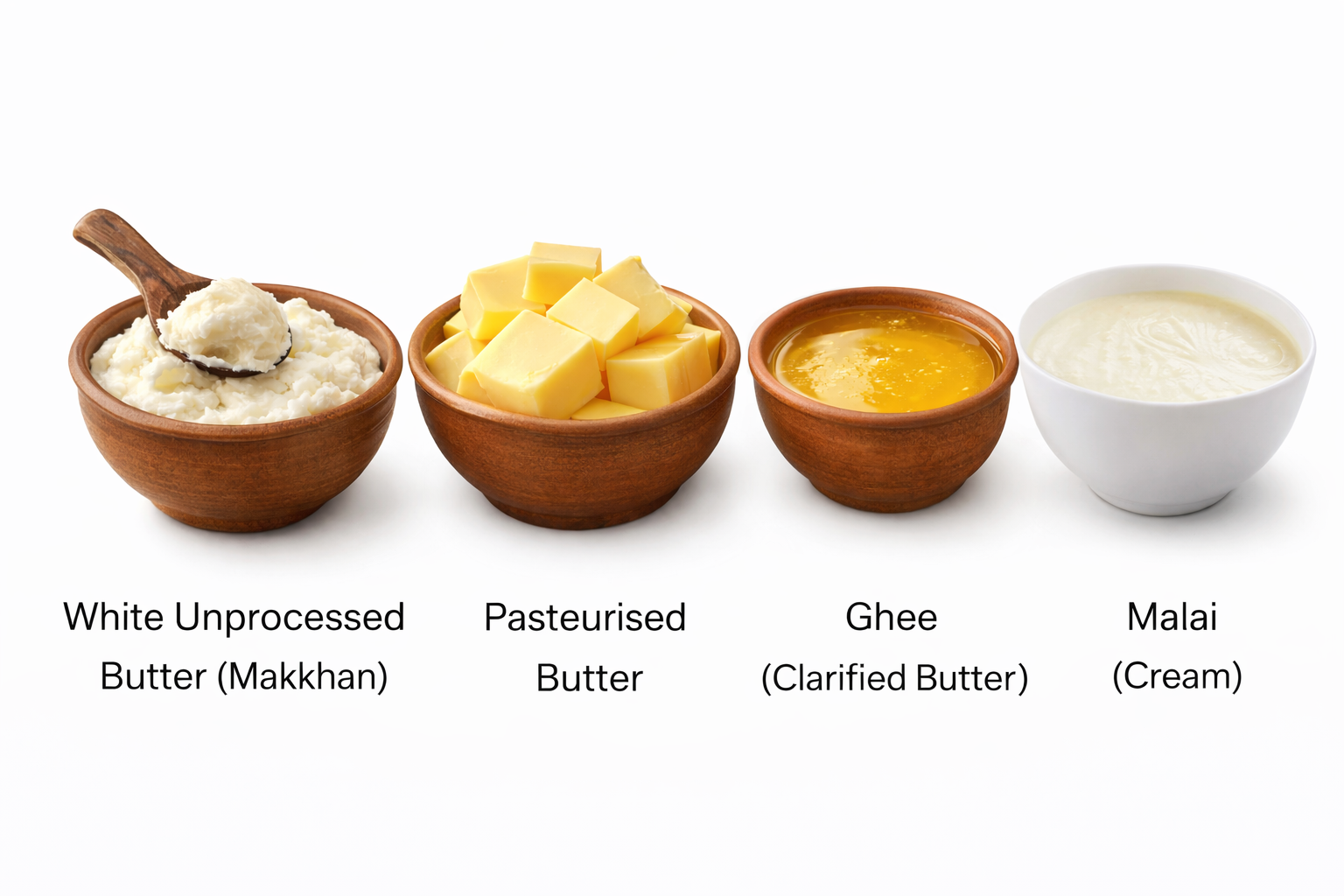
Ghee deserves special mention in this discussion, particularly in the Indian context. For generations, ghee has been part of everyday cooking, religious rituals, and traditional health practices. Older generations consumed ghee regularly, yet widespread heart disease was not the norm. This was not because ghee was magical, but because it was used sparingly, within diets rich in vegetables, legumes, whole grains, and physical activity.
The modern problem arises when ghee is consumed generously on top of calorie-dense, low-fiber diets and sedentary lifestyles. In such settings, ghee — being almost pure fat — can contribute to excess calorie intake and higher LDL cholesterol, especially in people who are already metabolically vulnerable. The issue, therefore, is not ghee itself, but context and quantity.
Current evidence supports the view that ghee is neither heart toxic nor heart healthy. In small amounts, as part of a wholesome diet, it is unlikely to pose a significant risk for most healthy individuals. Those with elevated LDL cholesterol, diabetes, or established heart disease should be more cautious and keep intake modest, favoring unsaturated fats more often.
In observational studies, in real life, people who chose to eat ghee didn’t have more heart attacks
Neither was ghee proven harmless under controlled conditions meaning experimental studies.
That distinction is exactly why guidelines remain cautious: don’t overdo ghee!
Ultimately, heart health is not decided by a spoonful of ghee. It is shaped by the overall pattern of eating, physical activity, body weight, stress, and long-term habits. Respecting culinary tradition while applying modern scientific understanding leads to the same conclusion again and again: moderation, not fear, is the wisest approach to dietary fats — including ghee!
So the verdict is: Healthy people can eat ghee moderately if they eat balanced nutrition rich in vegetables, legumes, whole cereals and fruits and are physically active. People elevated LDL cholesterol, diabetes have to be cautious about eating ghee!
Also read the article ‘Basics Of Nutrition’ and the ‘The Good And The Bad Fats’ on this website.