Fatty Liver Disease Or Hepatic Steatosis!
Fatty Liver Disease: The Silent Metabolic Warning!
What Is Fatty Liver Disease?
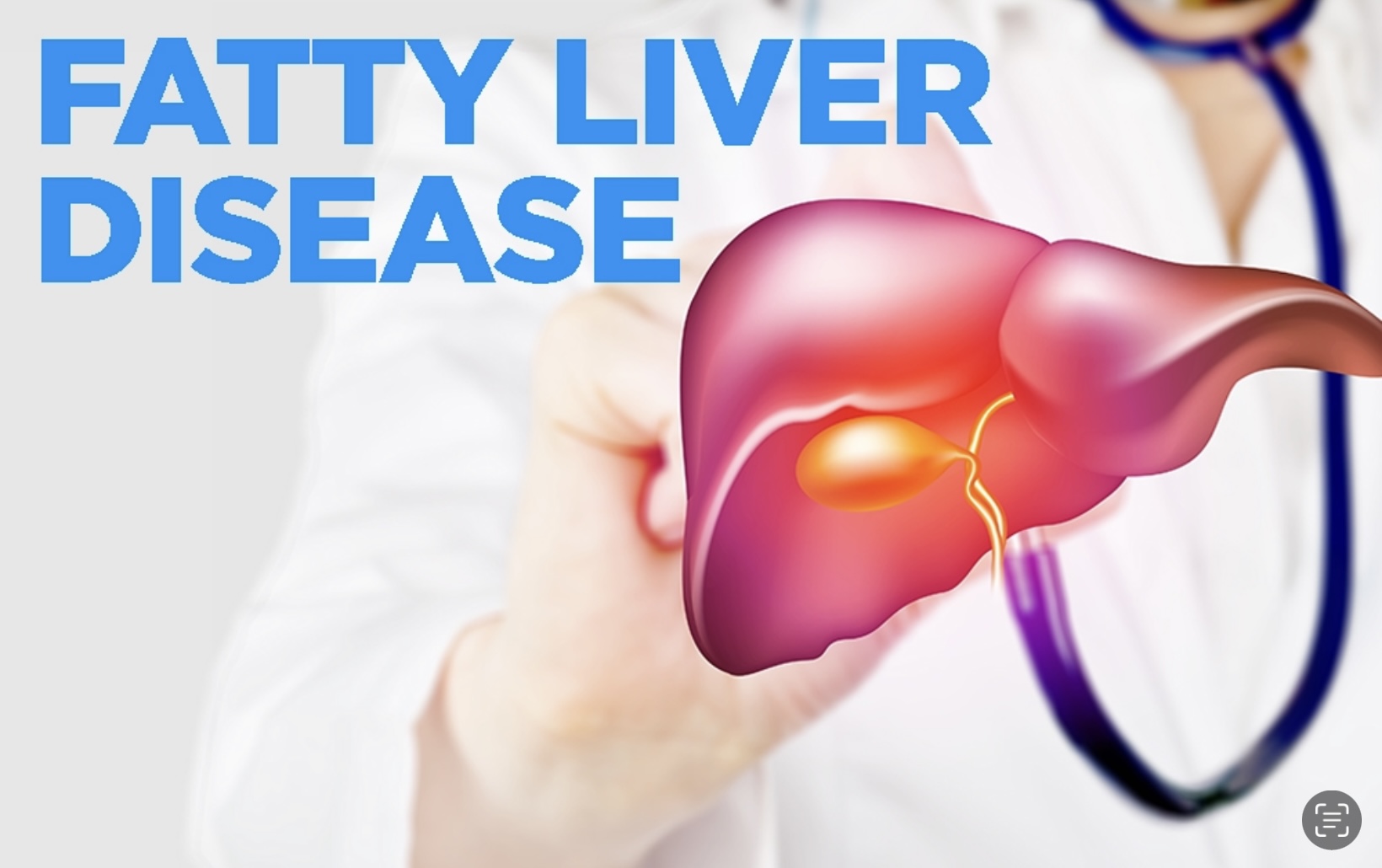
Fatty liver disease, or hepatic steatosis, refers to the accumulation of excess fat in liver cells.
It is one of the most common metabolic conditions today—and often one of the most overlooked.
Many people who are overweight are aware of the risks of hypertension, diabetes, and heart disease.
Far fewer realise that fatty liver disease is even more common—and can be just as serious.
In most cases, it is discovered incidentally during an ultrasound done for unrelated reasons.
Liver enzymes ALT (SGPT), AST (SGOT), GGT may be slightly raised in liver function test, but normal levels do not rule out fatty liver disease.
***
A Shift in Understanding:
Non-alcoholic fatty liver disease (NAFLD) to Metabolic dysfunction–associated steatotic liver disease (MASLD)
Traditionally, fatty liver disease has been classified as:
Alcoholic fatty liver disease
Non-alcoholic fatty liver disease (NAFLD)
However, modern medical consensus increasingly uses the term:
Metabolic dysfunction–associated steatotic liver disease (MASLD)
This better reflects the root cause—metabolic imbalance, not just absence of alcohol.
***
Spectrum of Disease
Fatty liver disease exists along a spectrum:
Simple fatty liver (steatosis) – fat accumulation without damage
Steatohepatitis (NASH / MASH) – fat with inflammation and liver cell injury
Fibrosis and cirrhosis – progressive scarring of the liver
Liver failure or liver cancer (in advanced cases)
Not everyone progresses—but a significant number do, especially in the presence of metabolic risk factors.
***
Why Does Fatty Liver Develop?
The exact mechanism is complex, but it is strongly linked to:
Abdominal obesity
Insulin resistance
Elevated blood sugar (prediabetes or diabetes)
High triglycerides
Metabolic syndrome
In simple terms:
When the body cannot properly handle excess energy, the liver becomes a storage site.
Over time, this fat can trigger inflammation and damage.
***
Who Is at Risk?
Fatty liver disease is increasingly seen across all age groups, including children.
Higher risk is associated with:
Central (abdominal) obesity
Type 2 diabetes
PCOS
Sedentary lifestyle
Sleep apnea
Hypothyroidism
High cholesterol and triglycerides
Even people who are not visibly obese may develop fatty liver if metabolic health is poor.
***
Symptoms: Often Silent
Most people with early fatty liver have no symptoms.
Some may experience:
Fatigue
Mild discomfort in the upper right abdomen
Symptoms usually appear only in advanced stages.
When It Progresses,
Advanced disease (cirrhosis) may present with:
Abdominal swelling (ascites)
Jaundice
Enlarged veins (varices)
Enlarged spleen
Confusion or drowsiness (hepatic encephalopathy)
These are signs of significant liver damage.
***
Complications
If not addressed, fatty liver disease can lead to:
Liver cirrhosis
Liver failure
Liver cancer
Internal bleeding (from varices)
This is why early identification and reversal are crucial.
***
The Good News: It Is Reversible
Unlike many chronic diseases, fatty liver disease—especially in early stages—is largely reversible.
The cornerstone of treatment is:
Sustainable weight reduction
Improved metabolic health
Regular physical activity
Nutritionally balanced eating patterns
Crash diets and extreme restrictions are neither necessary nor effective long term.
***
A Practical, Sustainable Approach
In our experience, the most effective results come not from drastic changes, but from intelligent nutritional fine-tuning of existing food habits.
When combined with:
Regular walking or simple physical activity
Gradual, sustainable fat loss
Improved metabolic markers
People not only reduce weight, but often reverse fatty liver and associated conditions like diabetes, hypertension, and heart disease.
***
An Important Takeaway
Many individuals with fatty liver disease are completely unaware of it.
Yet it may already be affecting their long-term health.
Recognising it early—and addressing the underlying metabolic imbalance—can prevent serious complications and restore health.
***
Related articles