Which Algae Provide DHA And EPA?
Microalgae, Spirulina, Chlorella And Nori!
Why Most ‘Algae Superfoods” Don’t Meet Your Omega-3 Needs?
Most algae are promoted as nutritional superfoods—but not all of them provide the omega-3 fats your body actually needs. If you are relying on spirulina, chlorella, or seaweed for DHA and EPA, you may be missing a critical piece of the puzzle. This article explains which algae truly deliver these essential fats—and which do not.
Microalgae: The True Source Of DHA And EPA
DHA (docosahexaenoic acid) and EPA (eicosapentaenoic acid) originate in marine microalgae—not in fish. Fish accumulate these fats by consuming algae, making microalgae the primary source in the food chain.
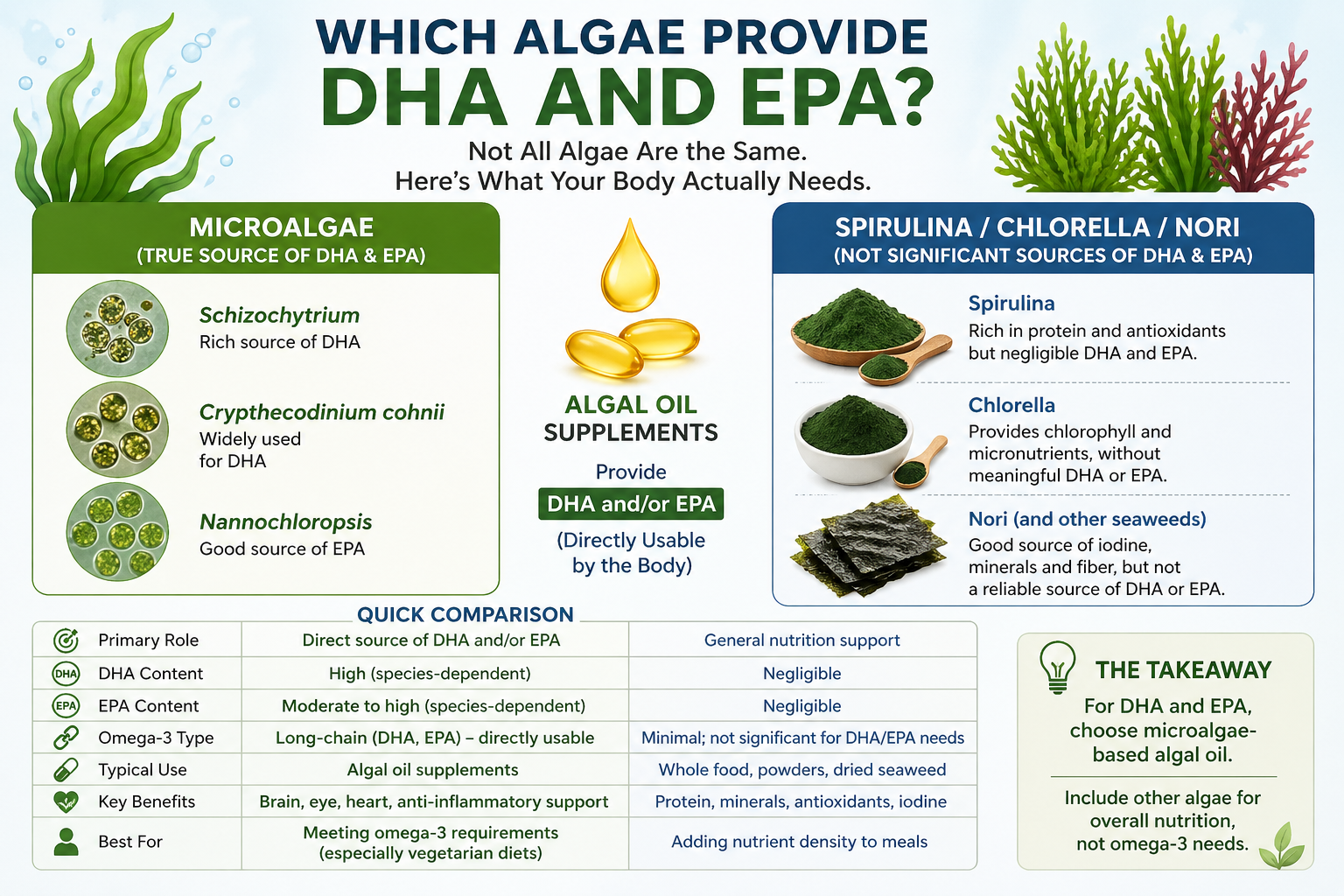
Certain species of microalgae are particularly rich in these long-chain omega-3s, DHA and EPA:
Schizochytrium – a concentrated source of DHA
Crypthecodinium cohnii – widely used for its DHA content
Nannochloropsis – a valuable source of EPA
These microalgae are cultivated and processed into algal oil, which forms the basis of most vegetarian and vegan omega-3 supplements. Unlike plant sources such as flaxseeds or walnuts, which provide ALA (alpha-linolenic acid), these deliver DHA and EPA directly—the forms the body actually uses.
This distinction matters because the conversion of ALA to DHA and EPA in humans is inefficient and often insufficient to meet physiological needs.
***
What Can You Actually Buy?
In practical terms, microalgae are not consumed directly as foods—they are available as algal oil supplements.
These typically come in:
Softgel capsules (most common)
Liquid algal oil (less common)
Most products provide DHA alone or a combination of DHA and EPA, usually in the range of 100–300 mg per serving. They are plant-based, fish-free, and sourced from controlled cultivation, making them a clean alternative to fish oil.
When choosing a supplement, the most useful label to check is the actual DHA and EPA content per serving, rather than just the term ‘omega-3’.
Other Algae: Nutritious, But Not Omega-3 Sources
Commonly consumed algae contribute valuable nutrients, but not meaningful amounts of DHA or EPA:
Spirulina – rich in protein and antioxidants like phycocyanin, but contains negligible DHA and EPA.
Chlorella – provides chlorophyll and micronutrients, without contributing significant DHA and EPA.
Nori (and other seaweeds) – a useful source of iodine, trace minerals, and fiber, but not a reliable source of DHA or EPA.
***
Why This Matters
Confusing these categories can create a false sense of nutritional adequacy. Regular intake of spirulina or seaweed does not ensure sufficient DHA and EPA.
For those who do not consume fatty fish, this gap is important, as DHA and EPA play key roles in brain function, vision, inflammation regulation, and cardiovascular health.
***
Quick Comparison: Microalgae Vs Common Edible Algae
Omega-3 From Algae: What Actually Works?
Microalgae: The Real Omega-3 Sources
Provides DHA and EPA (directly usable forms)
Examples: Schizochytrium, Nannochloropsis
Used as algal oil supplements
Supports: Brain • Eyes • Heart • Anti-inflammatory
Common Edible Algae Or Seaweed: Spirulina / Chlorella / Nori: The Non Omega-3 Nutritional Supplements:
Negligible DHA and EPA
Provide: Protein • Minerals • Antioxidants • Iodine
Useful for general nutrition, but not for omega-3 needs
***
Practical Takeaway
Use microalgae-derived algal oil to obtain DHA and EPA
Include other algae for their general nutritional value, not for omega-3s
Do not rely solely on ALA sources for providing long-chain omega-3, DHA and EPA
***
Conclusion
Algae are very good sources of nutrition, but not all of them provide DHA and EPA. Microalgae-derived algal oil provides a direct, effective source of DHA and EPA, while other algae serve as supportive, nutrient-rich foods.
Related articles: