
Posts Shortcodes
You can show the posts with Porto Blog, Porto Recent Posts shortcodes.
Recent
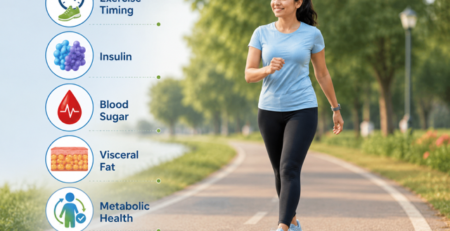
Exercise Timing, Insulin, Blood Sugar, Visceral Fat And Metabolic Health!
Exercise Timing, Insulin Resistance And Blood Sugar Spikes — Does Timing Matter? Exercise is one of the most powerful tools... read more
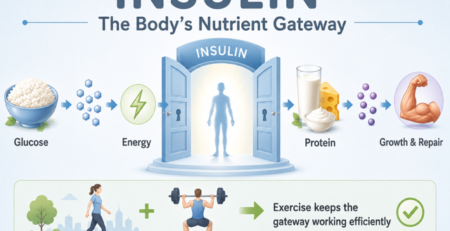
Insulin – The Body’s Nutrient Gateway!
Insulin Doesn’t Just Regulate Blood Sugar! Insulin – The Body’s Nutrient Gateway! Most people think insulin exists only to lower blood... read more
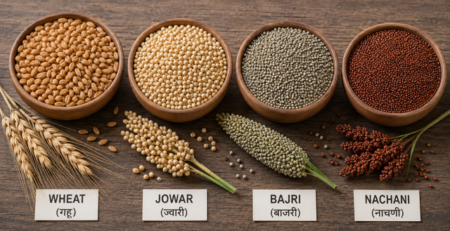
Which Is The Healthiest Indian Cereal?
Wheat, Khapli Wheat, Jowar, Bajri or Nachani: Which Is The Healthiest Cereal? Walk through any supermarket or browse social media,... read more

Milk And Paneer Vs Soya, Soya Milk And Tofu Proteins!
Milk Protein Vs Soya Protein: Which Is The Better Protein? Protein is one of the most important nutrients for maintaining... read more
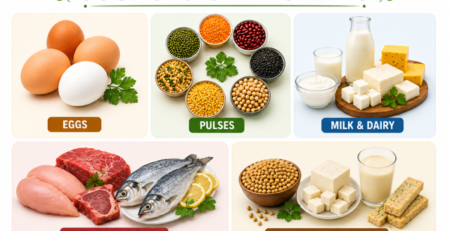
Protein: The Forgotten Nutrient in Indian Diets!
Are Proteins The Most Neglected Nutrient In our Diets? Protein is one of the three major nutrients our body needs... read more
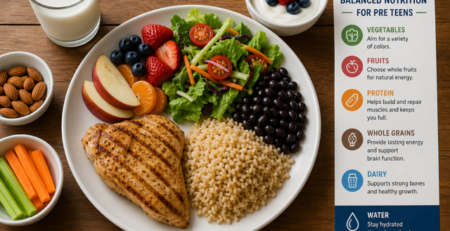
Healthy Nutrition for Pre-Teens!
Building Foundations for Lifelong Health! The pre-teen years (roughly 9–12 years of age) are a period of rapid physical and... read more

Can Exercise Turn Back the Clock on Your Heart?
What Consistent Exercise Can To Your Heart Health! We often think of aging as an unstoppable process. As the years... read more
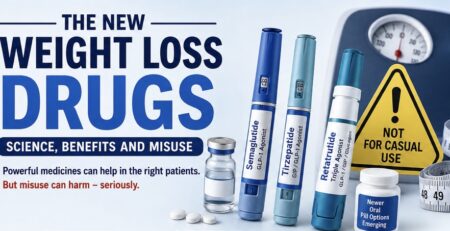
The New Weight Loss Drugs — Science, Benefits And Misuse!
Benefits As Medical Treatment And Dangers Of Unethical, Casual Use! A new class of medicines originally developed for diabetes has... read more
Timeline
August 2026
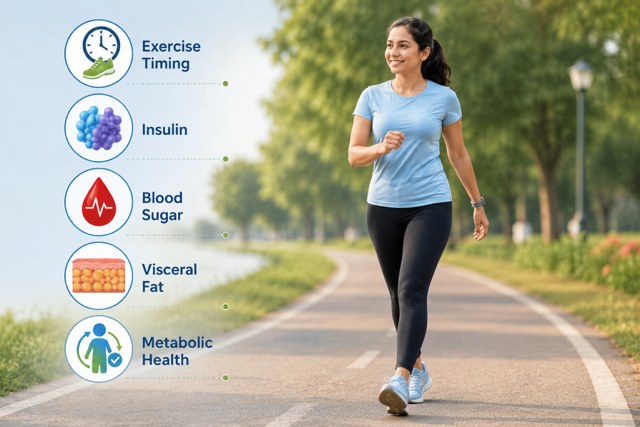
Exercise Timing, Insulin, Blood Sugar, Visceral Fat And Metabolic Health!
Exercise Timing, Insulin Resistance And Blood Sugar Spikes — Does Timing Matter?
Exercise is one of the most powerful tools for improving insulin resistance, reducing visceral fat and protecting long-term metabolic health.
But many people now ask an important question:
Does the timing of exercise matter?
Are morning walks uniquely beneficial?
Do post-meal walks reduce sugar spikes more effectively?
Can evening walks or slow runs also improve insulin resistance?
Modern research suggests that different timings of exercise may provide slightly different metabolic advantages — and combining them may produce the best results.
Exercise Improves Insulin Sensitivity For 24–48 Hours
Whenever we exercise — through brisk walking, slow jogging, cycling, swimming or other aerobic activity — muscles begin using glucose more efficiently.
Exercise:
- improves insulin signalling,
- increases muscle glucose uptake,
- activates GLUT-4 glucose transporters,
- and partially empties muscle glycogen stores.
As a result, muscles become more sensitive to insulin and require less insulin to absorb glucose from the bloodstream.
This improvement in insulin sensitivity may persist for:
- approximately 24 hours after moderate exercise,
- and sometimes up to 48 hours in insulin-resistant or previously sedentary individuals.
This is one reason why regular activity is so important — insulin resistance often worsens again after several inactive days.
Importantly, this benefit is not limited to morning exercise. Afternoon or evening walks, cycling sessions or slow runs can also improve insulin sensitivity into the next day.
Why Post-Meal Walks Are Especially Helpful
Post-meal walks provide an additional and particularly useful metabolic effect.
After eating, blood sugar and insulin levels naturally rise. If we remain inactive after meals, these spikes may become much larger — especially in individuals with:
- insulin resistance,
- visceral obesity,
- prediabetes,
- type 2 diabetes,
- and PCOS/PMOS.
Walking after meals helps contracting muscles directly absorb circulating glucose. As a result:
- blood sugar spikes become smaller,
- insulin spikes reduce,
- and overall glucose control improves.
Research shows that even:
- 10–15 minutes of brisk walking after meals
can significantly improve post-meal glucose control, especially after lunch and dinner.
Slow jogging may enhance this effect further, but brisk walking is often easier to sustain, gentler on joints and more practical for long-term consistency.
What About Exercise At Other Times Of The Day?
Exercise performed away from meals still provides major metabolic benefits.
Evening walks, afternoon exercise sessions and slow runs can:
- improve insulin sensitivity,
- reduce visceral fat,
- lower fasting insulin,
- improve glucose handling,
- and help reduce fatty liver over time.
Some studies even suggest that afternoon or evening exercise may sometimes improve glucose metabolism more effectively than early morning exercise, especially in insulin-resistant individuals. However, the differences are modest compared to the single most important factor:
Consistency
Regular movement matters far more than finding the “perfect” exercise timing.
The Best Strategy May Be A Combination Approach
Current evidence suggests that one of the most effective approaches for improving insulin resistance is combining:
- one dedicated daily exercise session,
with - short post-meal walks,
and - reducing prolonged sitting time.
For example:
- a morning brisk walk or slow run,
combined with - 10–15 minute walks after lunch and dinner,
may provide better metabolic benefits than only one long exercise session.
Even breaking prolonged sitting every 30–60 minutes may help improve insulin action.
Practical Take-Home Message
For improving insulin resistance, reducing visceral fat and stabilising blood sugar:
- regular brisk walking or slow jogging most days is highly beneficial,
- post-meal walks are especially effective for reducing glucose and insulin spikes,
- and exercise at almost any time of day improves metabolic health.
The greatest long-term benefits come not from perfect timing, but from regularity, sustainability and lifelong consistency.
Related articles
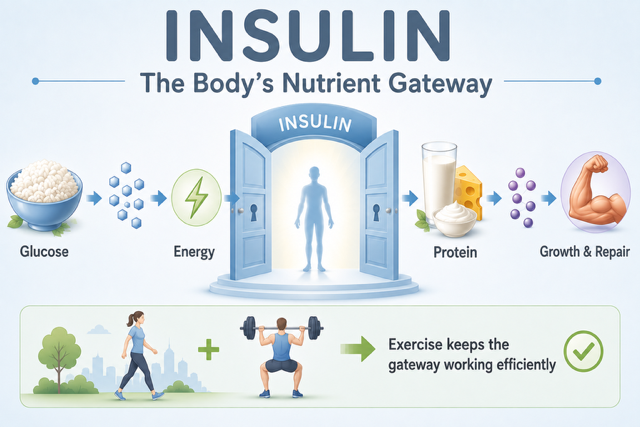
Insulin – The Body’s Nutrient Gateway!
Insulin Doesn’t Just Regulate Blood Sugar!
Insulin – The Body’s Nutrient Gateway!
Most people think insulin exists only to lower blood sugar.
In reality, insulin has a much broader and far more important job.
Its main role is to help nutrients move from the bloodstream into body cells where they can be used or stored.
You can think of insulin as the body’s gateway hormone.
Without insulin, many cells cannot efficiently receive the nutrients they need.
Gateway For Glucose
After eating carbohydrates, digestion releases glucose into the bloodstream.
Blood glucose rises.
The pancreas responds by releasing insulin.
Insulin acts like a key that unlocks the doors of muscle cells and fat cells.
Glucose then enters these cells where it can be:
• used immediately to produce energy,
• stored as glycogen in muscles and the liver,
• or, when energy intake greatly exceeds requirements, eventually converted into body fat.
Without sufficient insulin—or when the body’s cells become resistant to insulin—glucose remains in the bloodstream and blood sugar rises.
Gateway For Amino Acids
The story is different after eating proteins.
Proteins are broken down into amino acids.
These amino acids also stimulate insulin release.
But this time insulin is not trying to lower blood sugar.
Instead, insulin helps amino acids enter muscle cells and other body tissues.
Once inside the cells, these amino acids are used to:
• build new muscle protein,
• repair damaged tissues,
• produce enzymes,
• manufacture hormones,
• support immune function.
Here, insulin functions as a growth and repair hormone rather than a glucose-lowering hormone.
Milk Demonstrates Both Roles Beautifully
Milk naturally contains both lactose and high-quality proteins.
The lactose produces a modest rise in blood glucose.
The proteins stimulate insulin through their amino acids.
Consequently, milk illustrates both major functions of insulin simultaneously.
Insulin helps glucose enter cells.
At the same time, it helps amino acids enter muscles for repair and maintenance.
Very few foods demonstrate both roles so clearly.
Exercise Makes The Gateway Work Better
Exercise opens another fascinating chapter.
When muscles contract during walking or strength training, they become much more responsive to insulin.
In other words, the gateway becomes easier to open.
The same amount of insulin can move more glucose and amino acids into muscle cells.
As a result:
• blood sugar rises less after meals,
• less insulin is needed,
• muscles receive more nutrients,
• muscle maintenance improves,
• metabolic health becomes better.
This is why regular physical activity improves insulin sensitivity.
When The Gateway Becomes Rusty
In insulin resistance, the gateway no longer responds efficiently.
The pancreas has to produce more and more insulin to achieve the same effect.
Over time, blood glucose begins to rise.
This is one of the earliest steps in the development of type 2 diabetes.
Fortunately, weight loss, regular walking, strength training and a healthy diet can often restore much of the gateway’s efficiency.
The Take-Home Message
Insulin is much more than a blood sugar hormone.
It is the body’s nutrient gateway.
It allows glucose to enter cells for energy.
It allows amino acids to enter cells for growth and repair.
Healthy muscles respond well to insulin.
Regular exercise keeps this gateway working efficiently.
Understanding insulin in this way makes it much easier to understand diabetes, muscle health, healthy ageing and nutrition.
Related article:
Grid
Exercise Timing, Insulin, Blood Sugar, Visceral Fat And Metabolic Health!
Exercise Timing, Insulin Resistance And Blood Sugar Spikes — Does Timing Matter?
Exercise is one of the most powerful tools for improving insulin resistance, reducing visceral fat and protecting long-term metabolic health.
But many people now ask an important question:
Does the timing of exercise matter?
Are morning walks uniquely beneficial?
Do post-meal walks reduce sugar spikes more effectively?
Can evening walks or slow runs also improve insulin resistance?
Modern research suggests that different timings of exercise may provide slightly different metabolic advantages — and combining them may produce the best results.
Exercise Improves Insulin Sensitivity For 24–48 Hours
Whenever we exercise — through brisk walking, slow jogging, cycling, swimming or other aerobic activity — muscles begin using glucose more efficiently.
Exercise:
- improves insulin signalling,
- increases muscle glucose uptake,
- activates GLUT-4 glucose transporters,
- and partially empties muscle glycogen stores.
As a result, muscles become more sensitive to insulin and require less insulin to absorb glucose from the bloodstream.
This improvement in insulin sensitivity may persist for:
- approximately 24 hours after moderate exercise,
- and sometimes up to 48 hours in insulin-resistant or previously sedentary individuals.
This is one reason why regular activity is so important — insulin resistance often worsens again after several inactive days.
Importantly, this benefit is not limited to morning exercise. Afternoon or evening walks, cycling sessions or slow runs can also improve insulin sensitivity into the next day.
Why Post-Meal Walks Are Especially Helpful
Post-meal walks provide an additional and particularly useful metabolic effect.
After eating, blood sugar and insulin levels naturally rise. If we remain inactive after meals, these spikes may become much larger — especially in individuals with:
- insulin resistance,
- visceral obesity,
- prediabetes,
- type 2 diabetes,
- and PCOS/PMOS.
Walking after meals helps contracting muscles directly absorb circulating glucose. As a result:
- blood sugar spikes become smaller,
- insulin spikes reduce,
- and overall glucose control improves.
Research shows that even:
- 10–15 minutes of brisk walking after meals
can significantly improve post-meal glucose control, especially after lunch and dinner.
Slow jogging may enhance this effect further, but brisk walking is often easier to sustain, gentler on joints and more practical for long-term consistency.
What About Exercise At Other Times Of The Day?
Exercise performed away from meals still provides major metabolic benefits.
Evening walks, afternoon exercise sessions and slow runs can:
- improve insulin sensitivity,
- reduce visceral fat,
- lower fasting insulin,
- improve glucose handling,
- and help reduce fatty liver over time.
Some studies even suggest that afternoon or evening exercise may sometimes improve glucose metabolism more effectively than early morning exercise, especially in insulin-resistant individuals. However, the differences are modest compared to the single most important factor:
Consistency
Regular movement matters far more than finding the “perfect” exercise timing.
The Best Strategy May Be A Combination Approach
Current evidence suggests that one of the most effective approaches for improving insulin resistance is combining:
- one dedicated daily exercise session,
with - short post-meal walks,
and - reducing prolonged sitting time.
For example:
- a morning brisk walk or slow run,
combined with - 10–15 minute walks after lunch and dinner,
may provide better metabolic benefits than only one long exercise session.
Even breaking prolonged sitting every 30–60 minutes may help improve insulin action.
Practical Take-Home Message
For improving insulin resistance, reducing visceral fat and stabilising blood sugar:
- regular brisk walking or slow jogging most days is highly beneficial,
- post-meal walks are especially effective for reducing glucose and insulin spikes,
- and exercise at almost any time of day improves metabolic health.
The greatest long-term benefits come not from perfect timing, but from regularity, sustainability and lifelong consistency.
Related articles
Insulin – The Body’s Nutrient Gateway!
Insulin Doesn’t Just Regulate Blood Sugar!
Insulin – The Body’s Nutrient Gateway!
Most people think insulin exists only to lower blood sugar.
In reality, insulin has a much broader and far more important job.
Its main role is to help nutrients move from the bloodstream into body cells where they can be used or stored.
You can think of insulin as the body’s gateway hormone.
Without insulin, many cells cannot efficiently receive the nutrients they need.
Gateway For Glucose
After eating carbohydrates, digestion releases glucose into the bloodstream.
Blood glucose rises.
The pancreas responds by releasing insulin.
Insulin acts like a key that unlocks the doors of muscle cells and fat cells.
Glucose then enters these cells where it can be:
• used immediately to produce energy,
• stored as glycogen in muscles and the liver,
• or, when energy intake greatly exceeds requirements, eventually converted into body fat.
Without sufficient insulin—or when the body’s cells become resistant to insulin—glucose remains in the bloodstream and blood sugar rises.
Gateway For Amino Acids
The story is different after eating proteins.
Proteins are broken down into amino acids.
These amino acids also stimulate insulin release.
But this time insulin is not trying to lower blood sugar.
Instead, insulin helps amino acids enter muscle cells and other body tissues.
Once inside the cells, these amino acids are used to:
• build new muscle protein,
• repair damaged tissues,
• produce enzymes,
• manufacture hormones,
• support immune function.
Here, insulin functions as a growth and repair hormone rather than a glucose-lowering hormone.
Milk Demonstrates Both Roles Beautifully
Milk naturally contains both lactose and high-quality proteins.
The lactose produces a modest rise in blood glucose.
The proteins stimulate insulin through their amino acids.
Consequently, milk illustrates both major functions of insulin simultaneously.
Insulin helps glucose enter cells.
At the same time, it helps amino acids enter muscles for repair and maintenance.
Very few foods demonstrate both roles so clearly.
Exercise Makes The Gateway Work Better
Exercise opens another fascinating chapter.
When muscles contract during walking or strength training, they become much more responsive to insulin.
In other words, the gateway becomes easier to open.
The same amount of insulin can move more glucose and amino acids into muscle cells.
As a result:
• blood sugar rises less after meals,
• less insulin is needed,
• muscles receive more nutrients,
• muscle maintenance improves,
• metabolic health becomes better.
This is why regular physical activity improves insulin sensitivity.
When The Gateway Becomes Rusty
In insulin resistance, the gateway no longer responds efficiently.
The pancreas has to produce more and more insulin to achieve the same effect.
Over time, blood glucose begins to rise.
This is one of the earliest steps in the development of type 2 diabetes.
Fortunately, weight loss, regular walking, strength training and a healthy diet can often restore much of the gateway’s efficiency.
The Take-Home Message
Insulin is much more than a blood sugar hormone.
It is the body’s nutrient gateway.
It allows glucose to enter cells for energy.
It allows amino acids to enter cells for growth and repair.
Healthy muscles respond well to insulin.
Regular exercise keeps this gateway working efficiently.
Understanding insulin in this way makes it much easier to understand diabetes, muscle health, healthy ageing and nutrition.
Related article:
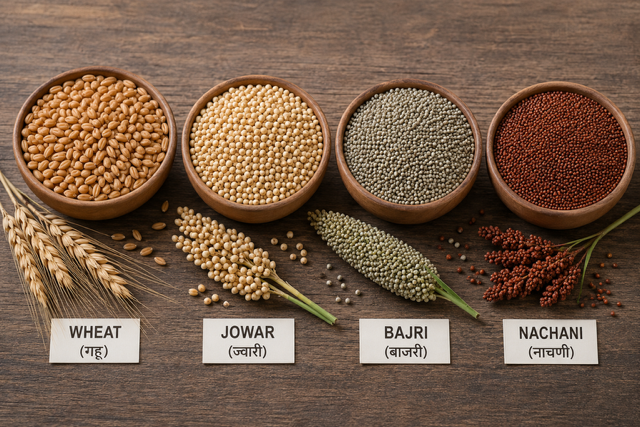
Which Is The Healthiest Indian Cereal?
Wheat, Khapli Wheat, Jowar, Bajri or Nachani: Which Is The Healthiest Cereal?
Walk through any supermarket or browse social media, and you’ll find claims that one grain is healthier than all the others. Khapli wheat is promoted as diabetic-friendly, jowar as an antioxidant powerhouse, bajri as rich in iron and nachani (ragi) as the ideal calcium-rich grain.
The truth is that no single grain is nutritionally superior in every respect. Each has its own strengths, and the healthiest choice depends on your overall diet, health goals and the way the grain is processed and prepared.
Comparison of Common Indian Cereals
***
Which Is the Healthiest Indian Cereal: Wheat, Khapli Wheat, Jowar, Bajri or Nachani?
Walk through any supermarket or browse social media, and you’ll find claims that one grain is healthier than all the others. Khapli (Emmer) wheat is promoted as diabetic-friendly, jowar as an antioxidant powerhouse, bajri as rich in iron, and nachani (ragi) as the ideal calcium-rich cereal.
The reality is more balanced. No single cereal is nutritionally superior in every respect. Each has its own strengths, and the healthiest choice depends not only on the grain itself but also on your overall diet, health goals and how the grain is processed and prepared.
Comparison of Common Indian Cereals:
Whole Wheat
Glycemic Index: 50–60
Key Nutritional Strengths: Protein, fibre, B vitamins, magnesium, zinc and selenium.
Major Antioxidants: Ferulic acid, phenolic acids and lignans.
Khapli Wheat
Glycemic Index: 40–50
Key Nutritional Strengths: More fibre, slightly more protein, iron, magnesium and zinc than modern wheat.
Major Antioxidants: Polyphenols, lutein, carotenoids and ferulic acid.
Jowar
Glycemic Index: 55–65
Key Nutritional Strengths: Protein, fibre, magnesium, phosphorus and potassium.
Major Antioxidants: Anthocyanins, flavonoids, phenolic acids and tannins.
Bajri
Glycemic Index: 50–55
Key Nutritional Strengths: Protein, fibre, iron, magnesium and phosphorus.
Major Antioxidants: Phenolic acids, flavonoids and phytosterols.
Nachani (Ragi)
Glycemic Index: 60–70†
Key Nutritional Strengths: Exceptionally rich in calcium, fibre, magnesium and potassium.
Major Antioxidants: Polyphenols, ferulic acid, catechins and tannins.
Approximate glycemic index values that vary with processing and cooking.
Finely ground nachani (ragi) flour may have a higher glycemic index than commonly believed.
What Makes Each cereal Special?
Whole Wheat
Whole wheat is an excellent everyday staple, supplying good-quality protein, dietary fibre, B-complex vitamins and several essential minerals. Because the bran and germ are retained, it also provides valuable antioxidant compounds that are largely lost during refining.
Khapli Wheat
Khapli wheat generally has one of the lowest glycemic indices among commonly consumed cereals. It also contains slightly more fibre, protein and several minerals than modern wheat, together with higher levels of naturally occurring antioxidants.
Jowar
Jowar is naturally gluten-free and stands out for its exceptionally rich antioxidant profile. These plant compounds may help reduce oxidative stress and chronic inflammation while contributing useful amounts of fibre and important minerals.
Bajri
Bajri combines dietary fibre with good amounts of iron, magnesium and protein, making it a nutrient-dense whole grain that provides sustained energy and supports overall nutritional balance.
Nachani (Ragi)
Ragi is unmatched among commonly eaten cereals for its calcium content and also provides fibre, magnesium and antioxidant compounds. However, despite its healthy reputation, finely milled ragi flour is not necessarily a low-glycemic food.
Processing Matters More Than Most People Realise
The way a grain is processed often has a greater impact on its effect on blood sugar than the grain itself.
Whole grains usually produce the lowest glycemic response.
Coarsely ground flour is generally preferable to finely milled flour.
Excessive grinding makes starch easier to digest, increasing the glycemic index.
Combining grains with pulses, vegetables, protein and healthy fats lowers the overall glycemic response of a meal.
Allowing cooked grains to cool before reheating increases resistant starch and may modestly reduce the glycemic response.
Which Cereal Comes Out on Top?
Lowest average glycemic index: Khapli wheat
Richest in antioxidants: Jowar
Highest calcium: Nachani (Ragi)
Highest iron: Bajri
Best all-round everyday staple: Whole wheat
Take-Home Message
Rather than searching for a single ‘super grain,’ it is wiser to appreciate the unique nutritional strengths of each. Whole wheat, khapli wheat, jowar, bajri and ragi all have an important place in a healthy diet.
Rotating different whole cereal through the week and combining them with pulses, soy foods, milk, curd, paneer, eggs, fish or lean meat, along with plenty of vegetables and healthy fats, provides a broader range of nutrients, improves overall diet quality and supports long-term metabolic health.
Related articles
Medium
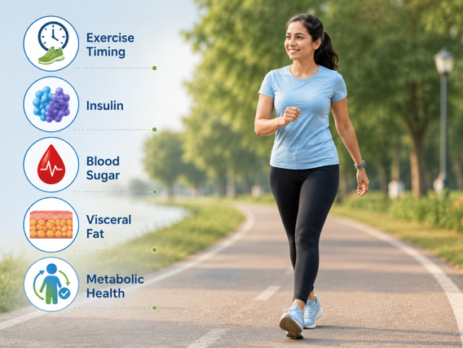
Exercise Timing, Insulin, Blood Sugar, Visceral Fat And Metabolic Health!
Exercise Timing, Insulin Resistance And Blood Sugar Spikes — Does Timing Matter?
Exercise is one of the most powerful tools for improving insulin resistance, reducing visceral fat and protecting long-term metabolic health.
But many people now ask an important question:
Does the timing of exercise matter?
Are morning walks uniquely beneficial?
Do post-meal walks reduce sugar spikes more effectively?
Can evening walks or slow runs also improve insulin resistance?
Modern research suggests that different timings of exercise may provide slightly different metabolic advantages — and combining them may produce the best results.
Exercise Improves Insulin Sensitivity For 24–48 Hours
Whenever we exercise — through brisk walking, slow jogging, cycling, swimming or other aerobic activity — muscles begin using glucose more efficiently.
Exercise:
- improves insulin signalling,
- increases muscle glucose uptake,
- activates GLUT-4 glucose transporters,
- and partially empties muscle glycogen stores.
As a result, muscles become more sensitive to insulin and require less insulin to absorb glucose from the bloodstream.
This improvement in insulin sensitivity may persist for:
- approximately 24 hours after moderate exercise,
- and sometimes up to 48 hours in insulin-resistant or previously sedentary individuals.
This is one reason why regular activity is so important — insulin resistance often worsens again after several inactive days.
Importantly, this benefit is not limited to morning exercise. Afternoon or evening walks, cycling sessions or slow runs can also improve insulin sensitivity into the next day.
Why Post-Meal Walks Are Especially Helpful
Post-meal walks provide an additional and particularly useful metabolic effect.
After eating, blood sugar and insulin levels naturally rise. If we remain inactive after meals, these spikes may become much larger — especially in individuals with:
- insulin resistance,
- visceral obesity,
- prediabetes,
- type 2 diabetes,
- and PCOS/PMOS.
Walking after meals helps contracting muscles directly absorb circulating glucose. As a result:
- blood sugar spikes become smaller,
- insulin spikes reduce,
- and overall glucose control improves.
Research shows that even:
- 10–15 minutes of brisk walking after meals
can significantly improve post-meal glucose control, especially after lunch and dinner.
Slow jogging may enhance this effect further, but brisk walking is often easier to sustain, gentler on joints and more practical for long-term consistency.
What About Exercise At Other Times Of The Day?
Exercise performed away from meals still provides major metabolic benefits.
Evening walks, afternoon exercise sessions and slow runs can:
- improve insulin sensitivity,
- reduce visceral fat,
- lower fasting insulin,
- improve glucose handling,
- and help reduce fatty liver over time.
Some studies even suggest that afternoon or evening exercise may sometimes improve glucose metabolism more effectively than early morning exercise, especially in insulin-resistant individuals. However, the differences are modest compared to the single most important factor:
Consistency
Regular movement matters far more than finding the “perfect” exercise timing.
The Best Strategy May Be A Combination Approach
Current evidence suggests that one of the most effective approaches for improving insulin resistance is combining:
- one dedicated daily exercise session,
with - short post-meal walks,
and - reducing prolonged sitting time.
For example:
- a morning brisk walk or slow run,
combined with - 10–15 minute walks after lunch and dinner,
may provide better metabolic benefits than only one long exercise session.
Even breaking prolonged sitting every 30–60 minutes may help improve insulin action.
Practical Take-Home Message
For improving insulin resistance, reducing visceral fat and stabilising blood sugar:
- regular brisk walking or slow jogging most days is highly beneficial,
- post-meal walks are especially effective for reducing glucose and insulin spikes,
- and exercise at almost any time of day improves metabolic health.
The greatest long-term benefits come not from perfect timing, but from regularity, sustainability and lifelong consistency.
Related articles
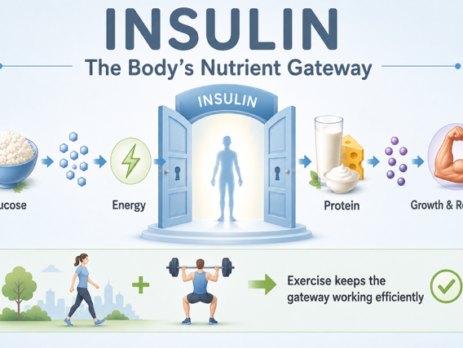
Insulin – The Body’s Nutrient Gateway!
Insulin Doesn’t Just Regulate Blood Sugar!
Insulin – The Body’s Nutrient Gateway!
Most people think insulin exists only to lower blood sugar.
In reality, insulin has a much broader and far more important job.
Its main role is to help nutrients move from the bloodstream into body cells where they can be used or stored.
You can think of insulin as the body’s gateway hormone.
Without insulin, many cells cannot efficiently receive the nutrients they need.
Gateway For Glucose
After eating carbohydrates, digestion releases glucose into the bloodstream.
Blood glucose rises.
The pancreas responds by releasing insulin.
Insulin acts like a key that unlocks the doors of muscle cells and fat cells.
Glucose then enters these cells where it can be:
• used immediately to produce energy,
• stored as glycogen in muscles and the liver,
• or, when energy intake greatly exceeds requirements, eventually converted into body fat.
Without sufficient insulin—or when the body’s cells become resistant to insulin—glucose remains in the bloodstream and blood sugar rises.
Gateway For Amino Acids
The story is different after eating proteins.
Proteins are broken down into amino acids.
These amino acids also stimulate insulin release.
But this time insulin is not trying to lower blood sugar.
Instead, insulin helps amino acids enter muscle cells and other body tissues.
Once inside the cells, these amino acids are used to:
• build new muscle protein,
• repair damaged tissues,
• produce enzymes,
• manufacture hormones,
• support immune function.
Here, insulin functions as a growth and repair hormone rather than a glucose-lowering hormone.
Milk Demonstrates Both Roles Beautifully
Milk naturally contains both lactose and high-quality proteins.
The lactose produces a modest rise in blood glucose.
The proteins stimulate insulin through their amino acids.
Consequently, milk illustrates both major functions of insulin simultaneously.
Insulin helps glucose enter cells.
At the same time, it helps amino acids enter muscles for repair and maintenance.
Very few foods demonstrate both roles so clearly.
Exercise Makes The Gateway Work Better
Exercise opens another fascinating chapter.
When muscles contract during walking or strength training, they become much more responsive to insulin.
In other words, the gateway becomes easier to open.
The same amount of insulin can move more glucose and amino acids into muscle cells.
As a result:
• blood sugar rises less after meals,
• less insulin is needed,
• muscles receive more nutrients,
• muscle maintenance improves,
• metabolic health becomes better.
This is why regular physical activity improves insulin sensitivity.
When The Gateway Becomes Rusty
In insulin resistance, the gateway no longer responds efficiently.
The pancreas has to produce more and more insulin to achieve the same effect.
Over time, blood glucose begins to rise.
This is one of the earliest steps in the development of type 2 diabetes.
Fortunately, weight loss, regular walking, strength training and a healthy diet can often restore much of the gateway’s efficiency.
The Take-Home Message
Insulin is much more than a blood sugar hormone.
It is the body’s nutrient gateway.
It allows glucose to enter cells for energy.
It allows amino acids to enter cells for growth and repair.
Healthy muscles respond well to insulin.
Regular exercise keeps this gateway working efficiently.
Understanding insulin in this way makes it much easier to understand diabetes, muscle health, healthy ageing and nutrition.
Related article:
Large
Exercise Timing, Insulin, Blood Sugar, Visceral Fat And Metabolic Health!
Exercise Timing, Insulin Resistance And Blood Sugar Spikes — Does Timing Matter?
Exercise is one of the most powerful tools for improving insulin resistance, reducing visceral fat and protecting long-term metabolic health.
But many people now ask an important question:
Does the timing of exercise matter?
Are morning walks uniquely beneficial?
Do post-meal walks reduce sugar spikes more effectively?
Can evening walks or slow runs also improve insulin resistance?
Modern research suggests that different timings of exercise may provide slightly different metabolic advantages — and combining them may produce the best results.
Exercise Improves Insulin Sensitivity For 24–48 Hours
Whenever we exercise — through brisk walking, slow jogging, cycling, swimming or other aerobic activity — muscles begin using glucose more efficiently.
Exercise:
- improves insulin signalling,
- increases muscle glucose uptake,
- activates GLUT-4 glucose transporters,
- and partially empties muscle glycogen stores.
As a result, muscles become more sensitive to insulin and require less insulin to absorb glucose from the bloodstream.
This improvement in insulin sensitivity may persist for:
- approximately 24 hours after moderate exercise,
- and sometimes up to 48 hours in insulin-resistant or previously sedentary individuals.
This is one reason why regular activity is so important — insulin resistance often worsens again after several inactive days.
Importantly, this benefit is not limited to morning exercise. Afternoon or evening walks, cycling sessions or slow runs can also improve insulin sensitivity into the next day.
Why Post-Meal Walks Are Especially Helpful
Post-meal walks provide an additional and particularly useful metabolic effect.
After eating, blood sugar and insulin levels naturally rise. If we remain inactive after meals, these spikes may become much larger — especially in individuals with:
- insulin resistance,
- visceral obesity,
- prediabetes,
- type 2 diabetes,
- and PCOS/PMOS.
Walking after meals helps contracting muscles directly absorb circulating glucose. As a result:
- blood sugar spikes become smaller,
- insulin spikes reduce,
- and overall glucose control improves.
Research shows that even:
- 10–15 minutes of brisk walking after meals
can significantly improve post-meal glucose control, especially after lunch and dinner.
Slow jogging may enhance this effect further, but brisk walking is often easier to sustain, gentler on joints and more practical for long-term consistency.
What About Exercise At Other Times Of The Day?
Exercise performed away from meals still provides major metabolic benefits.
Evening walks, afternoon exercise sessions and slow runs can:
- improve insulin sensitivity,
- reduce visceral fat,
- lower fasting insulin,
- improve glucose handling,
- and help reduce fatty liver over time.
Some studies even suggest that afternoon or evening exercise may sometimes improve glucose metabolism more effectively than early morning exercise, especially in insulin-resistant individuals. However, the differences are modest compared to the single most important factor:
Consistency
Regular movement matters far more than finding the “perfect” exercise timing.
The Best Strategy May Be A Combination Approach
Current evidence suggests that one of the most effective approaches for improving insulin resistance is combining:
- one dedicated daily exercise session,
with - short post-meal walks,
and - reducing prolonged sitting time.
For example:
- a morning brisk walk or slow run,
combined with - 10–15 minute walks after lunch and dinner,
may provide better metabolic benefits than only one long exercise session.
Even breaking prolonged sitting every 30–60 minutes may help improve insulin action.
Practical Take-Home Message
For improving insulin resistance, reducing visceral fat and stabilising blood sugar:
- regular brisk walking or slow jogging most days is highly beneficial,
- post-meal walks are especially effective for reducing glucose and insulin spikes,
- and exercise at almost any time of day improves metabolic health.
The greatest long-term benefits come not from perfect timing, but from regularity, sustainability and lifelong consistency.
Related articles
Insulin – The Body’s Nutrient Gateway!
Insulin Doesn’t Just Regulate Blood Sugar!
Insulin – The Body’s Nutrient Gateway!
Most people think insulin exists only to lower blood sugar.
In reality, insulin has a much broader and far more important job.
Its main role is to help nutrients move from the bloodstream into body cells where they can be used or stored.
You can think of insulin as the body’s gateway hormone.
Without insulin, many cells cannot efficiently receive the nutrients they need.
Gateway For Glucose
After eating carbohydrates, digestion releases glucose into the bloodstream.
Blood glucose rises.
The pancreas responds by releasing insulin.
Insulin acts like a key that unlocks the doors of muscle cells and fat cells.
Glucose then enters these cells where it can be:
• used immediately to produce energy,
• stored as glycogen in muscles and the liver,
• or, when energy intake greatly exceeds requirements, eventually converted into body fat.
Without sufficient insulin—or when the body’s cells become resistant to insulin—glucose remains in the bloodstream and blood sugar rises.
Gateway For Amino Acids
The story is different after eating proteins.
Proteins are broken down into amino acids.
These amino acids also stimulate insulin release.
But this time insulin is not trying to lower blood sugar.
Instead, insulin helps amino acids enter muscle cells and other body tissues.
Once inside the cells, these amino acids are used to:
• build new muscle protein,
• repair damaged tissues,
• produce enzymes,
• manufacture hormones,
• support immune function.
Here, insulin functions as a growth and repair hormone rather than a glucose-lowering hormone.
Milk Demonstrates Both Roles Beautifully
Milk naturally contains both lactose and high-quality proteins.
The lactose produces a modest rise in blood glucose.
The proteins stimulate insulin through their amino acids.
Consequently, milk illustrates both major functions of insulin simultaneously.
Insulin helps glucose enter cells.
At the same time, it helps amino acids enter muscles for repair and maintenance.
Very few foods demonstrate both roles so clearly.
Exercise Makes The Gateway Work Better
Exercise opens another fascinating chapter.
When muscles contract during walking or strength training, they become much more responsive to insulin.
In other words, the gateway becomes easier to open.
The same amount of insulin can move more glucose and amino acids into muscle cells.
As a result:
• blood sugar rises less after meals,
• less insulin is needed,
• muscles receive more nutrients,
• muscle maintenance improves,
• metabolic health becomes better.
This is why regular physical activity improves insulin sensitivity.
When The Gateway Becomes Rusty
In insulin resistance, the gateway no longer responds efficiently.
The pancreas has to produce more and more insulin to achieve the same effect.
Over time, blood glucose begins to rise.
This is one of the earliest steps in the development of type 2 diabetes.
Fortunately, weight loss, regular walking, strength training and a healthy diet can often restore much of the gateway’s efficiency.
The Take-Home Message
Insulin is much more than a blood sugar hormone.
It is the body’s nutrient gateway.
It allows glucose to enter cells for energy.
It allows amino acids to enter cells for growth and repair.
Healthy muscles respond well to insulin.
Regular exercise keeps this gateway working efficiently.
Understanding insulin in this way makes it much easier to understand diabetes, muscle health, healthy ageing and nutrition.
Related article:
Large Alt
Exercise Timing, Insulin, Blood Sugar, Visceral Fat And Metabolic Health!
Exercise Timing, Insulin Resistance And Blood Sugar Spikes — Does Timing Matter?
Exercise is one of the most powerful tools for improving insulin resistance, reducing visceral fat and protecting long-term metabolic health.
But many people now ask an important question:
Does the timing of exercise matter?
Are morning walks uniquely beneficial?
Do post-meal walks reduce sugar spikes more effectively?
Can evening walks or slow runs also improve insulin resistance?
Modern research suggests that different timings of exercise may provide slightly different metabolic advantages — and combining them may produce the best results.
Exercise Improves Insulin Sensitivity For 24–48 Hours
Whenever we exercise — through brisk walking, slow jogging, cycling, swimming or other aerobic activity — muscles begin using glucose more efficiently.
Exercise:
- improves insulin signalling,
- increases muscle glucose uptake,
- activates GLUT-4 glucose transporters,
- and partially empties muscle glycogen stores.
As a result, muscles become more sensitive to insulin and require less insulin to absorb glucose from the bloodstream.
This improvement in insulin sensitivity may persist for:
- approximately 24 hours after moderate exercise,
- and sometimes up to 48 hours in insulin-resistant or previously sedentary individuals.
This is one reason why regular activity is so important — insulin resistance often worsens again after several inactive days.
Importantly, this benefit is not limited to morning exercise. Afternoon or evening walks, cycling sessions or slow runs can also improve insulin sensitivity into the next day.
Why Post-Meal Walks Are Especially Helpful
Post-meal walks provide an additional and particularly useful metabolic effect.
After eating, blood sugar and insulin levels naturally rise. If we remain inactive after meals, these spikes may become much larger — especially in individuals with:
- insulin resistance,
- visceral obesity,
- prediabetes,
- type 2 diabetes,
- and PCOS/PMOS.
Walking after meals helps contracting muscles directly absorb circulating glucose. As a result:
- blood sugar spikes become smaller,
- insulin spikes reduce,
- and overall glucose control improves.
Research shows that even:
- 10–15 minutes of brisk walking after meals
can significantly improve post-meal glucose control, especially after lunch and dinner.
Slow jogging may enhance this effect further, but brisk walking is often easier to sustain, gentler on joints and more practical for long-term consistency.
What About Exercise At Other Times Of The Day?
Exercise performed away from meals still provides major metabolic benefits.
Evening walks, afternoon exercise sessions and slow runs can:
- improve insulin sensitivity,
- reduce visceral fat,
- lower fasting insulin,
- improve glucose handling,
- and help reduce fatty liver over time.
Some studies even suggest that afternoon or evening exercise may sometimes improve glucose metabolism more effectively than early morning exercise, especially in insulin-resistant individuals. However, the differences are modest compared to the single most important factor:
Consistency
Regular movement matters far more than finding the “perfect” exercise timing.
The Best Strategy May Be A Combination Approach
Current evidence suggests that one of the most effective approaches for improving insulin resistance is combining:
- one dedicated daily exercise session,
with - short post-meal walks,
and - reducing prolonged sitting time.
For example:
- a morning brisk walk or slow run,
combined with - 10–15 minute walks after lunch and dinner,
may provide better metabolic benefits than only one long exercise session.
Even breaking prolonged sitting every 30–60 minutes may help improve insulin action.
Practical Take-Home Message
For improving insulin resistance, reducing visceral fat and stabilising blood sugar:
- regular brisk walking or slow jogging most days is highly beneficial,
- post-meal walks are especially effective for reducing glucose and insulin spikes,
- and exercise at almost any time of day improves metabolic health.
The greatest long-term benefits come not from perfect timing, but from regularity, sustainability and lifelong consistency.
Related articles
Insulin – The Body’s Nutrient Gateway!
Insulin Doesn’t Just Regulate Blood Sugar!
Insulin – The Body’s Nutrient Gateway!
Most people think insulin exists only to lower blood sugar.
In reality, insulin has a much broader and far more important job.
Its main role is to help nutrients move from the bloodstream into body cells where they can be used or stored.
You can think of insulin as the body’s gateway hormone.
Without insulin, many cells cannot efficiently receive the nutrients they need.
Gateway For Glucose
After eating carbohydrates, digestion releases glucose into the bloodstream.
Blood glucose rises.
The pancreas responds by releasing insulin.
Insulin acts like a key that unlocks the doors of muscle cells and fat cells.
Glucose then enters these cells where it can be:
• used immediately to produce energy,
• stored as glycogen in muscles and the liver,
• or, when energy intake greatly exceeds requirements, eventually converted into body fat.
Without sufficient insulin—or when the body’s cells become resistant to insulin—glucose remains in the bloodstream and blood sugar rises.
Gateway For Amino Acids
The story is different after eating proteins.
Proteins are broken down into amino acids.
These amino acids also stimulate insulin release.
But this time insulin is not trying to lower blood sugar.
Instead, insulin helps amino acids enter muscle cells and other body tissues.
Once inside the cells, these amino acids are used to:
• build new muscle protein,
• repair damaged tissues,
• produce enzymes,
• manufacture hormones,
• support immune function.
Here, insulin functions as a growth and repair hormone rather than a glucose-lowering hormone.
Milk Demonstrates Both Roles Beautifully
Milk naturally contains both lactose and high-quality proteins.
The lactose produces a modest rise in blood glucose.
The proteins stimulate insulin through their amino acids.
Consequently, milk illustrates both major functions of insulin simultaneously.
Insulin helps glucose enter cells.
At the same time, it helps amino acids enter muscles for repair and maintenance.
Very few foods demonstrate both roles so clearly.
Exercise Makes The Gateway Work Better
Exercise opens another fascinating chapter.
When muscles contract during walking or strength training, they become much more responsive to insulin.
In other words, the gateway becomes easier to open.
The same amount of insulin can move more glucose and amino acids into muscle cells.
As a result:
• blood sugar rises less after meals,
• less insulin is needed,
• muscles receive more nutrients,
• muscle maintenance improves,
• metabolic health becomes better.
This is why regular physical activity improves insulin sensitivity.
When The Gateway Becomes Rusty
In insulin resistance, the gateway no longer responds efficiently.
The pancreas has to produce more and more insulin to achieve the same effect.
Over time, blood glucose begins to rise.
This is one of the earliest steps in the development of type 2 diabetes.
Fortunately, weight loss, regular walking, strength training and a healthy diet can often restore much of the gateway’s efficiency.
The Take-Home Message
Insulin is much more than a blood sugar hormone.
It is the body’s nutrient gateway.
It allows glucose to enter cells for energy.
It allows amino acids to enter cells for growth and repair.
Healthy muscles respond well to insulin.
Regular exercise keeps this gateway working efficiently.
Understanding insulin in this way makes it much easier to understand diabetes, muscle health, healthy ageing and nutrition.
Related article: