Carbohydrates Don’t Make Us Fat!
The Myth Of Low Carbohydrate Diets!
Carbohydrates are the first source of energy of our body. Amongst the three major components of our food, viz. carbohydrates, proteins and fats, the primary role of carbohydrates is to provide energy that our body needs for all it’s basic needs. We use energy drawn from this source for all our daily activities and for all the processes that go on in our body day and night.
Fats are the reserve source energy of our body and they are drawn upon for energy only when carbohydrate energy is exhausted.
Proteins are the most important constituents of most of the tissues of the body. They are essential for the growth, development and repair of the daily wear and tear of the body. They are responsible for the defence mechanism of the body. They are also essential for the formation of various enzymes and hormones in our body.
Proteins are not meant to be an energy source. Body uses proteins for energy only in survival mode when you are on a ‘very low calorie diet’ (VLCD), or on a diet very low on carbohydrates, our principal fuel energy source.
On such a low fuel energy mode, body cannot burn fats fast enough to meet it’s immediate energy needs and uses up proteins from food for energy, depriving the body of the vital role that proteins perform. Thus you need enough carbohydrates in your food to ‘spare’ proteins from being used for energy. This is the vital ‘protein sparing’ function of carbohydrates.
And as a last resort, the body also raids the proteins in the connective tissue, the muscles and vital organs of the body for energy. This is the reason why people on low calorie – low carbohydrate diets become wrinkled, shrivelled and look older with sagging, unhealthy skin and go on to suffer from multiple dietary deficiencies.
***
Carbohydrates are of two types, viz. simple and complex carbohydrates.
Simple carbohydrates are made up of one or two sugar molecules while complex carbohydrates are made up of long chains of glucose molecules.
Sugar, jaggery, honey, arrowroot, sago, rava, maida, refined corn flour are simple carbohydrates.
Starch and fibre are the two main types of complex carbohydrates and cereals and pulses are the main sources of complex carbohydrates.
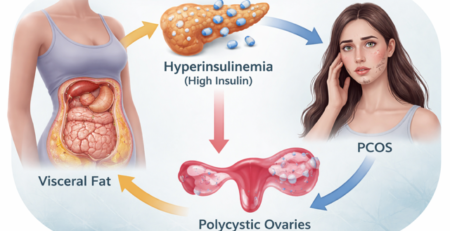
Simple carbohydrates are digested quickly and cause sharp spikes in blood sugar and lead to hyperinsulinemia, insulin resistance, weight gain and can also lead to diabetes.
In contrast, complex carbohydrates are digested slowly and provide steady supply of glucose and hence energy to the body, preventing spikes in blood insulin levels, hyperinsulinemia and insulin resistance, weight gain and diabetes.
The sugars in fruits are simple carbohydrates, but due to the ample fibre and water in them, these simple sugars are absorbed slowly in the body and do not cause sudden spike in blood sugar. Thus fruits behave more like complex carbohydrates than simple carbohydrates.
So it is consuming too much simple carbohydrates regularly that leads to hyperinsulinemia, insulin resistance, weight gain and diabetes, not complex carbohydrates.
Complex carbohydrates foods like cereals and pulses are also rich in essential nutrients like fiber, vitamins, especially B vitamins and minerals like iron, magnesium and selenium.
Complex carbohydrates are the only source of fibre in our food.
Fibre is of two types, insoluble and soluble.
Insoluble fibre is crucial to digestion, bowel movement and to the maintenance our gut health.
The insoluble fibre helps regulate blood sugar and cholesterol.
Complex carbohydrates contribute to satiety, helping to control appetite and reduce overall calorie intake. Having well balanced food with adequate complex carbohydrates, without of course over eating, helps in controlling weight rather than causing obesity as is often wrongly projected.
Brain function: Glucose is the primary source of energy for the brain. Complex carbohydrates provide steady supply of glucose to the brain cells and this helps in the smooth functioning of the brain and helps support cognitive functions, including memory and concentration.
***
Lack of adequate complex carbohydrates in food leads to low energy levels, fatigues and deficiencies of vital nutrients like fiber, vitamins, especially B vitamins and minerals like iron, magnesium and selenium.
Lack of insoluble fibre in low carbohydrate diets leads to constipation, haemorrhoids (piles) and fissures and can also lead to development of conditions like diverticulitis and colon cancer.
High levels of fat and hence calories, in low carbohydrate diets can also cause obesity.
Lack of soluble fibre and presence of high levels of saturated fats in low carbohydrate diets can lead to raised levels of LDL cholesterol and total cholesterol, heart disease and strokes.
Low carbohydrate diets also lead to impairment of cognitive functions including memory, concentration and mental clarity and focus.
***
Researchers like Sara Seidelmann, a cardiovascular researcher and former clinical research fellow at Brigham and Women’s Hospital in Boston, a top US hospital, have found that people on animal based low carbohydrate diets are associated with shorter life span and should be discouraged.
According to this study, people who got 50 – 55 % of their calories from carbohydrates, on an average, outlived those on low carb diets by four years and those on high carb diets by one year.
So we can conclude that high animal source, low carb diets are worse than high carb diets and balanced nutrition is the best choice whether you are looking to lose weight or simply live healthy!
***
Thus a low carbohydrate diet is bad either for healthy living or for losing or maintaining weight. You must have enough carbohydrates in your food irrespective of whether you are losing weight or maintaining healthy weight.
People losing weight on balanced, healthy nutrition, slim down with glowing, healthy skin and look fresh and young!
You definitely can lose weight and stay slim and healthy on balanced, healthy nutrition, in fact you can’t lose weight healthily without being on healthy nutrition.
Yes, over consumption of simple carbohydrates is bad for your blood sugar and weight, but not complex carbohydrates.
Yes, simple carbohydrates lack any significant nutrition, but complex carbohydrates provide us with sustained energy, ample vitamins, minerals and antioxidants, help regulate blood sugar, cholesterol and also weight.
Complex carbohydrates don’t make us fat, it’s excess calories that make us fat and excess calories come from overall overeating, not just overeating carbohydrates!
Excess proteins, over and above your daily needs and fats also contribute calories that account for your weight gain.
In fact fats provide over twice the number of calories supplied by carbohydrates and proteins, nine per gm as compared to four each per gm supplied by carbohydrates and proteins.
So why single out carbohydrates as the villain?
Low carbohydrate diets are invariably not ‘high protein diets’ as they are projected to be, by their sponsors, but they are more ‘high fat’ than high protein diets. Such diets send your blood triglyceride levels shooting up and eventually your cholesterol levels will also shoot up. This is an invitation to heart disease and strokes.
So low carbohydrate diets are more likely to give you heart disease and strokes than make you slim and safe from hypertension, diabetes, heart disease and strokes!
***
Important takeaway:
For millions of Indians, food remains deeply rooted in culture, affordability and vegetarian traditions. Cereals such as rice, wheat, jowar and bajra form the bulk of daily calories, while proteins are mostly obtained through the traditional complementation of pulses and cereals — such as dal-rice, khichdi, roti-dal or idli-sambar — with milk and curd adding additional high-quality proteins.
This dietary pattern can be healthy and sustainable, but modern sedentary lifestyles have changed the equation.
Reduced physical activity combined with large carbohydrate-heavy meals can produce repeated blood sugar and insulin spikes, contributing over time to abdominal obesity, insulin resistance, fatty liver disease, prediabetes, type 2 diabetes and cardiovascular disease.
The answer is not abandoning traditional Indian food, but modifying both meal composition and activity patterns.
Meals can be made metabolically safer by reducing sugar, jaggery, white rice and refined carbohydrates like rava and maida and increasing fibre and protein intake. Replacing part of polished rice with brown rice and having adequate vegetables, salads, pulses, sprouts and protein-rich foods slows glucose absorption and improves satiety. Replacing part of wheat consumption with some millets such as jowar and nachani (ragi) may also help because of their higher fibre content and relatively lower glycaemic impact compared to wheat.
Physical activity is equally important. Morning walks or exercise improve insulin sensitivity for several hours, helping muscles utilise glucose more efficiently throughout the day. In addition, even a gentle 10–20 minute walk after meals can help muscles directly absorb circulating glucose, reducing post-meal blood sugar and insulin spikes.
Thus, a practical and sustainable strategy for modern Indian lifestyles may include:
Better balanced traditional meals,
Greater use of fibre-rich foods and millets,
Regular morning exercise,
And short post-meal walks.
Traditional Indian diets evolved alongside traditionally active lifestyles. In today’s sedentary environment, combining smarter food choices with regular movement may be one of the simplest ways to protect long-term metabolic health.
Related articles