Glycemic Index (GI) And Glycemic Load (GL)
Learning What GI And GL Are And How They Affect Blood Sugar
Most people have heard about the Glycemic Index (GI) and Glycemic Load (GL).
Let us understand exactly what they are.
The Glycemic Index (GI) is a numerical value that tells us how quickly a carbohydrate-containing food raises blood sugar compared with pure glucose. Pure glucose is assigned a value of 100, and other foods are given values between 0 and 100 according to how rapidly they raise blood sugar.
As a general rule, the more processed a carbohydrate-rich food is, the higher its GI is likely to be. On the other hand, foods that contain more fibre, protein or fat usually have a lower GI because they slow the absorption of carbohydrate.
The lower the Glycemic Index of a food, the more slowly it raises blood sugar. The higher its Glycemic Index, the faster it raises blood sugar.
At first glance, it might seem obvious that we should simply avoid foods with a high GI if we are trying to control our blood sugar, lose weight or improve our health.
But does the Glycemic Index tell us the whole story?
No, it does not.
Take watermelon as an example. It has a fairly high Glycemic Index—around 75 to 80. However, watermelon contains very little carbohydrate in a normal serving because most of it is water. As a result, its Glycemic Load is only about 5, which means that a typical serving has only a modest effect on blood sugar. This is why people with diabetes can usually enjoy watermelon in sensible portions without causing a major rise in blood glucose.
This is where the Glycemic Load (GL) becomes useful.
While the Glycemic Index tells us how quickly a food raises blood sugar, the Glycemic Load tells us how much it is likely to raise blood sugar in a normal serving.
Glycemic Load is calculated by multiplying the grams of available carbohydrate in a serving of food by its Glycemic Index and then dividing the result by 100.
Because it considers both the quality of the carbohydrate (its GI) and the quantity of carbohydrate in the serving, Glycemic Load gives a more realistic idea of the food’s overall effect on blood sugar.
Glycemic Load can be calculated for a single serving of food, an entire meal or even a whole day’s diet.
The Verdict
Some experts recommend using the Glycemic Index, the Glycemic Load, or both when choosing foods, particularly for people with diabetes. Others feel that these measures are too complicated for everyday use.
The American Diabetes Association points out that the total amount of carbohydrate eaten is generally a stronger predictor of blood sugar levels than the Glycemic Index or Glycemic Load alone.
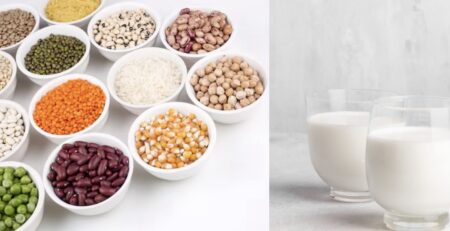
For most people, the healthiest approach is not to become overly concerned with GI and GL, but to eat a balanced diet in sensible portions. Choose mostly whole grains, pulses, vegetables and fruits, limit refined and highly processed carbohydrates, avoid excess fat, and stay physically active through regular walking or any other suitable form of exercise.
In everyday life, the Glycemic Load of a meal depends not only on the cereal chosen but also on the portion size and what is eaten along with it.
Ultimately, maintaining a healthy body weight and good physical fitness has a far greater influence on blood sugar control and overall health than focusing on any single number. The slimmer and fitter you are, the better your blood sugar control is likely to be.
Related articles
‘Preventing Diabetes’ and
‘The Good And The Bad Carbohydrates’ on this website.