Which Is The Healthiest Indian Cereal?
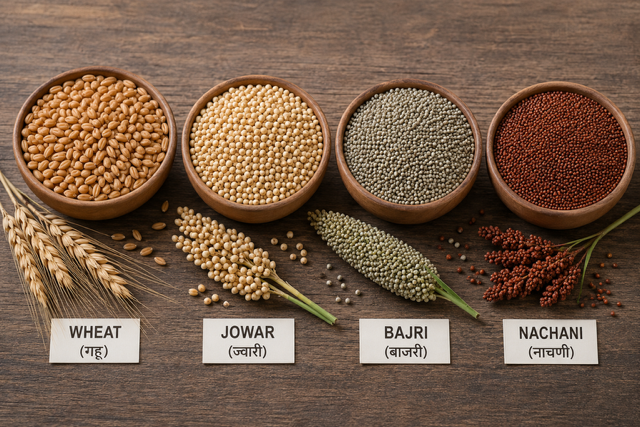
Wheat, Khapli Wheat, Jowar, Bajri or Nachani: Which Is The Healthiest Cereal?
Walk through any supermarket or browse social media, and you’ll find claims that one grain is healthier than all the others. Khapli wheat is promoted as diabetic-friendly, jowar as an antioxidant powerhouse, bajri as rich in iron and nachani (ragi) as the ideal calcium-rich grain.
The truth is that no single grain is nutritionally superior in every respect. Each has its own strengths, and the healthiest choice depends on your overall diet, health goals and the way the grain is processed and prepared.
Comparison of Common Indian Cereals
***
Which Is the Healthiest Indian Cereal: Wheat, Khapli Wheat, Jowar, Bajri or Nachani?
Walk through any supermarket or browse social media, and you’ll find claims that one grain is healthier than all the others. Khapli (Emmer) wheat is promoted as diabetic-friendly, jowar as an antioxidant powerhouse, bajri as rich in iron, and nachani (ragi) as the ideal calcium-rich cereal.
The reality is more balanced. No single cereal is nutritionally superior in every respect. Each has its own strengths, and the healthiest choice depends not only on the grain itself but also on your overall diet, health goals and how the grain is processed and prepared.
Comparison of Common Indian Cereals:
Whole Wheat
Glycemic Index: 50–60
Key Nutritional Strengths: Protein, fibre, B vitamins, magnesium, zinc and selenium.
Major Antioxidants: Ferulic acid, phenolic acids and lignans.
Khapli Wheat
Glycemic Index: 40–50
Key Nutritional Strengths: More fibre, slightly more protein, iron, magnesium and zinc than modern wheat.
Major Antioxidants: Polyphenols, lutein, carotenoids and ferulic acid.
Jowar
Glycemic Index: 55–65
Key Nutritional Strengths: Protein, fibre, magnesium, phosphorus and potassium.
Major Antioxidants: Anthocyanins, flavonoids, phenolic acids and tannins.
Bajri
Glycemic Index: 50–55
Key Nutritional Strengths: Protein, fibre, iron, magnesium and phosphorus.
Major Antioxidants: Phenolic acids, flavonoids and phytosterols.
Nachani (Ragi)
Glycemic Index: 60–70†
Key Nutritional Strengths: Exceptionally rich in calcium, fibre, magnesium and potassium.
Major Antioxidants: Polyphenols, ferulic acid, catechins and tannins.
Approximate glycemic index values that vary with processing and cooking.
Finely ground nachani (ragi) flour may have a higher glycemic index than commonly believed.
What Makes Each cereal Special?
Whole Wheat
Whole wheat is an excellent everyday staple, supplying good-quality protein, dietary fibre, B-complex vitamins and several essential minerals. Because the bran and germ are retained, it also provides valuable antioxidant compounds that are largely lost during refining.
Khapli Wheat
Khapli wheat generally has one of the lowest glycemic indices among commonly consumed cereals. It also contains slightly more fibre, protein and several minerals than modern wheat, together with higher levels of naturally occurring antioxidants.
Jowar
Jowar is naturally gluten-free and stands out for its exceptionally rich antioxidant profile. These plant compounds may help reduce oxidative stress and chronic inflammation while contributing useful amounts of fibre and important minerals.
Bajri
Bajri combines dietary fibre with good amounts of iron, magnesium and protein, making it a nutrient-dense whole grain that provides sustained energy and supports overall nutritional balance.
Nachani (Ragi)
Ragi is unmatched among commonly eaten cereals for its calcium content and also provides fibre, magnesium and antioxidant compounds. However, despite its healthy reputation, finely milled ragi flour is not necessarily a low-glycemic food.
Processing Matters More Than Most People Realise
The way a grain is processed often has a greater impact on its effect on blood sugar than the grain itself.
Whole grains usually produce the lowest glycemic response.
Coarsely ground flour is generally preferable to finely milled flour.
Excessive grinding makes starch easier to digest, increasing the glycemic index.
Combining grains with pulses, vegetables, protein and healthy fats lowers the overall glycemic response of a meal.
Allowing cooked grains to cool before reheating increases resistant starch and may modestly reduce the glycemic response.
Which Cereal Comes Out on Top?
Lowest average glycemic index: Khapli wheat
Richest in antioxidants: Jowar
Highest calcium: Nachani (Ragi)
Highest iron: Bajri
Best all-round everyday staple: Whole wheat
Take-Home Message
Rather than searching for a single ‘super grain,’ it is wiser to appreciate the unique nutritional strengths of each. Whole wheat, khapli wheat, jowar, bajri and ragi all have an important place in a healthy diet.
Rotating different whole cereal through the week and combining them with pulses, soy foods, milk, curd, paneer, eggs, fish or lean meat, along with plenty of vegetables and healthy fats, provides a broader range of nutrients, improves overall diet quality and supports long-term metabolic health.
Related articles